

Key Takeaways:
- An inclusive diversity and inclusion assessment of recruitment exposes where bias in hiring surfaces and shows exactly how to fix it.
- Diverse leadership teams correlate with stronger financial outperformance, and candidates look for employers that take inclusion seriously.
- Structured interviews, fair language in job ads, and stage-by-stage DEI metrics reduce adverse impact and improve hiring quality.
- NES Advantage’s Diversity Diagnostic Report is a sector-specific DEI audit that benchmarks your recruitment, pinpoints barriers, and delivers an action plan.
All types of businesses, including those in energy, engineering, and technical industries, begin to see true progress when they remove friction from the talent funnel and widen access to skilled people. Inclusive recruitment is about designing a hiring process that minimises bias, maximises fairness, and attracts talent from all backgrounds. It’s well evidenced that organisations with more diverse leadership are more likely to outperform financially, and recent analyses show the link has strengthened over time. Plus, job seekers pay attention; in a widely cited survey, 76% said a diverse workforce matters when weighing employers, which means a visible, credible stance on diversity and inclusion in the workplace is now part of your competitive brand.
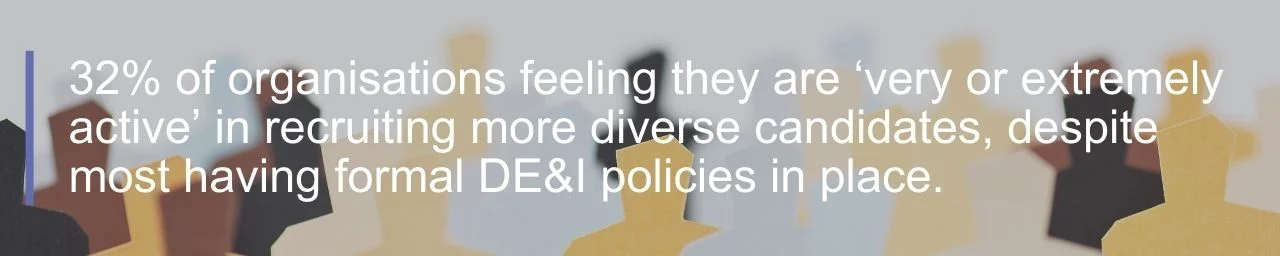
However, practice in implementing strong DEI strategies falls short when businesses lack the right knowledge or tools. Research finds uneven progress in inclusive recruitment, with only 32% of organisations feeling they are ‘very or extremely active’ in recruiting more diverse candidates, despite most having formal DE&I policies in place. This is often because employers miss the data and structure to identify when exclusion occurs.
A recruitment audit that includes an inclusive lens lets you see objectively where your hiring process may unintentionally disadvantage certain groups, and gives you a clear baseline for improvement.
What an inclusive recruitment audit covers
An inclusive recruitment audit is a systematic review of your recruitment process from start to finish, with a focus on identifying barriers that prevent equal opportunity for all candidates and testing whether your process offers fair access and consistent decisions.
Done well, it assesses:
- Recruitment marketing and employer branding
- Job descriptions and language analysis
- Application and selection processes
- Candidate experience and progression rates
- Interview practices and decision criteria
- Data collection, reporting, and diversity metrics
- Onboarding processes and new hire integration
Unlike static DE&I checklists, an inclusive audit uncovers patterns of exclusion and bias and sets priorities for meaningful change. For UK employers, this also helps you evidence compliance under the Equality Act 2010 and EHRC codes when designing selection processes and workforce diversity policy.
Signs your process is excluding talent
- Representation drops off at specific stages. If underrepresented candidates apply but rarely reach interviews or an offer, some step – criteria, sourcing tools, screening or job messaging – may be putting them at a disadvantage. Employers frequently lack the visibility to diagnose this without better funnel data.
- Job ads contain exclusionary language. Even small wording choices can discourage qualified applicants from applying. For example, masculine-coded words (e.g., dominant, competitive) can reduce role appeal for women by lowering perceived fit. Removing jargon and ensuring neutral language opens your talent funnel.
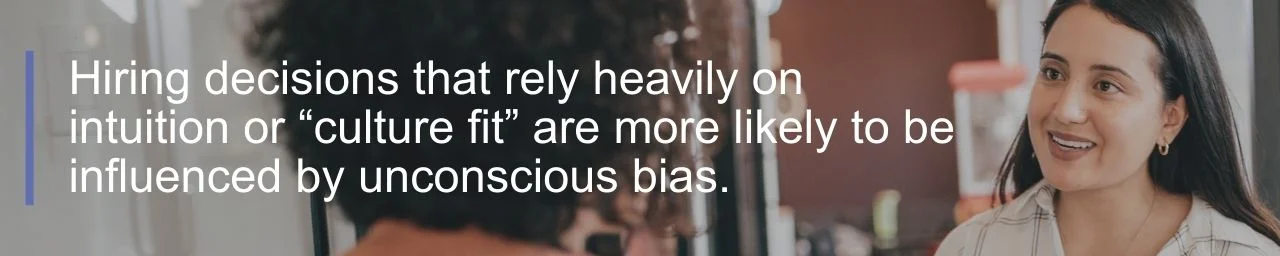
- Unstructured interviews dominate decisions. Hiring decisions that rely heavily on intuition or “culture fit” are more likely to be influenced by unconscious bias. Evidence shows structured interviews, standardised questions, and anchored scoring deliver higher validity and lower adverse impact than many other methods.
- Lack of measurable diversity metrics. One of the most common barriers to inclusive hiring isn’t resistance - it’s lack of visibility. If your organisation doesn’t track data, then hiring decisions are likely being shaped by perception rather than evidence.
- Automation is unchecked. From CV parsers to video analysis, AI can create a differential impact if not validated and monitored, causing unconscious bias, especially if there’s no human judgement. Regulators now issue specific guidance on this.
- Early attrition is high. Inclusive recruitment continues into structured onboarding; when this is weak, new hires leave before they’ve had a fair chance to succeed.
How to reduce bias in the hiring process (and improve quality)
1. Correct the words that exclude people
Look over your job descriptions and templates for wording that might unintentionally discourage someone from applying. Even small tweaks, such as removing jargon and ensuring neutral language, open your talent funnel.
2. Adopt structured interviews
Clarify what the role truly requires, then build interview questions around those competencies. Using consistent questions and a simple scoring guide helps interviewers focus on evidence, which usually leads to fairer and more reliable decisions.
3. Measure, don’t guess
Make sure you’re tracking agreed-upon DEI metrics. These could include how many people move from application to interview, time-to-progress by group, offer acceptance rates, and early retention. Reviewing this data and keeping an eye on any potential adverse impact will give you a clearer picture.
4. Strengthen onboarding
Role clarity, line manager support and intentional introductions to the team can improve adjustment and retention, especially in remote or site-based project roles common in energy and engineering sectors.
5. Keep compliance in view
Positive action is permitted in very specific situations, such as when two candidates are genuinely equally qualified. If you plan to use it, ensure the reasoning is clear and properly documented so your approach remains fair and compliant.
Types of bias in hiring to look for
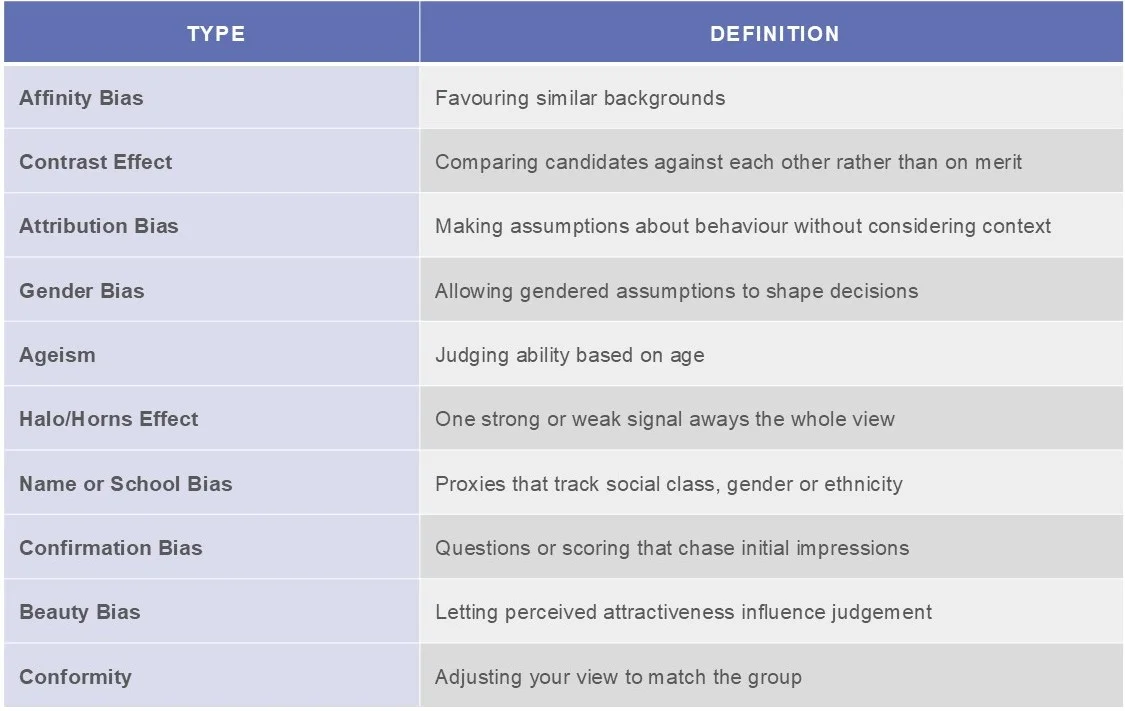
(source: NHS)
These blind spots are what structure, calibration and DEI metrics are intended to neutralise.
Where AI helps and where it harms
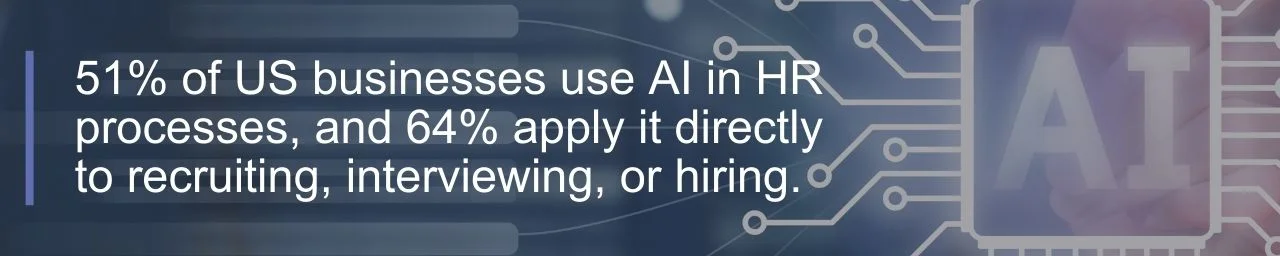
AI and automation play a large role in recruitment today, speeding up tasks that once took teams hours. Market data shows how quickly it’s become embedded: 51% of US businesses use AI in HR processes, and 64% apply it directly to recruiting, interviewing, or hiring. Technology can make early screening quicker and help teams identify patterns they might miss on their own. The risk, though, is that these systems learn from whatever data they’re given, and if that data reflects old biases, the tool can carry those forward. When AI isn’t monitored properly, it can end up magnifying hidden human assumptions rather than challenging them. A Harvard Business Review study found that algorithmic hiring tools often “lock in” a narrow definition of fairness, sidelining contextual judgement and reducing candidate diversity.
Legislation, such as the UK’s Data (Use and Access) Act 2025, places clear expectations on employers that adopt automated screening tools. Employers now have to be clear about how their automated hiring tools operate, and they must keep a real human involved in any decision that affects a candidate. Applicants also need a simple route to question an automated result. On top of that, any system that sorts or screens candidates has to go through a Data Protection Impact Assessment and be checked regularly for signs of bias. AI can improve recruitment, but only when accompanied by thorough oversight.
How NES Advantage’s Diagnostic Report Can Benefit You
While you can start an audit with internal resources, organisations that partner with expert advisers gain far deeper insights and strategic advantage.
If you want a recruitment DEI audit with sector depth, NES Advantage offers diversity diagnostics designed for energy, engineering and technical, and STEM-intensive industries. Our Diversity Diagnostic Report examines your hiring system, from employer brand to interviews and early experience, benchmarks you against sector norms, and provides a prioritised improvement plan with quick wins and longer-term changes.
“The Diversity Diagnostic replaced assumption with insight and gave us a structured path to more inclusive hiring.” People Director, International Energy Firm
You will receive a themed, RAG-rated report, accessibility and candidate-experience recommendations, and enablement for HR and hiring teams. If you require DEI consulting services, contact our team today to improve diversity in the workplace with an in-depth report.

FAQs
How can I improve inclusive recruitment strategies using AI platforms?
Use AI to speed up screening and spot patterns, but always monitor tools for bias and keep human oversight to ensure fairness and compliance.
What are the benefits of implementing a diversity hiring strategy?
It widens your talent pool, improves fairness and financial performance, and strengthens your employer brand to align with candidate expectations around inclusive and diverse workplaces.
How to identify and remove bias from job descriptions?
Review language to remove jargon and gender-coded terms, ensuring wording stays neutral and accessible to all applicants.
Which types of recruitment agencies specialise in diverse talent sourcing?
Inclusive recruitment partners, such as NES Advantage, focus on removing barriers across the hiring process and can offer DEI-focused audits and guidance tailored to industry needs.
How does NES Advantage’s Diversity Diagnostic Report support inclusive hiring?
It audits every stage of your hiring process, benchmarks performance, and provides a clear, prioritised action plan to reduce bias and improve candidate experience.